Friday, July 4, 2014

Responding Jewishly to Terror and Grief - Balaq 5774


It was about 9 PM in Israel when I heard the news. My 13-year-old son and I were on Highway 90, just north of Beit She'an, driving south to Ben Gurion Airport for our 12:45 AM flight to JFK. He heard it several minutes before it came over the radio, because he was in communication with his friends via his smartphone. He announced, almost too casually, “Abba, did you know about the three kidnapping victims?” “Yes,” I said. “They found their bodies.”


I gasped audibly. So loudly, in fact, that he jumped. “Why are you so shocked?” he asked.

Why indeed? I must confess that this was not the outcome that I had expected. A living Israeli is worth far more to Hamas than a dead one. Gil'ad Shalit was exchanged for 1,027 Palestinian prisoners. I figured that somebody in the territories had masterminded a plan to get 3,000 or 5,000 more. But no – the original plan seemed to have backfired.  

My son further asked me, “Why do you care so much? You're not Israeli.”

“But I'm Jewish,” I replied. “I don't live in Israel, and about half of the Jews in the world do not live in Israel. But we are all one people. And when members of Am Yisrael, the nation of Israel, feel pain, whether they are citizens of the State of Israel or France or Canada or Argentina or India, we all feel that pain.”

“Oh,” he said, and that proceeded to think quietly about this revelation.

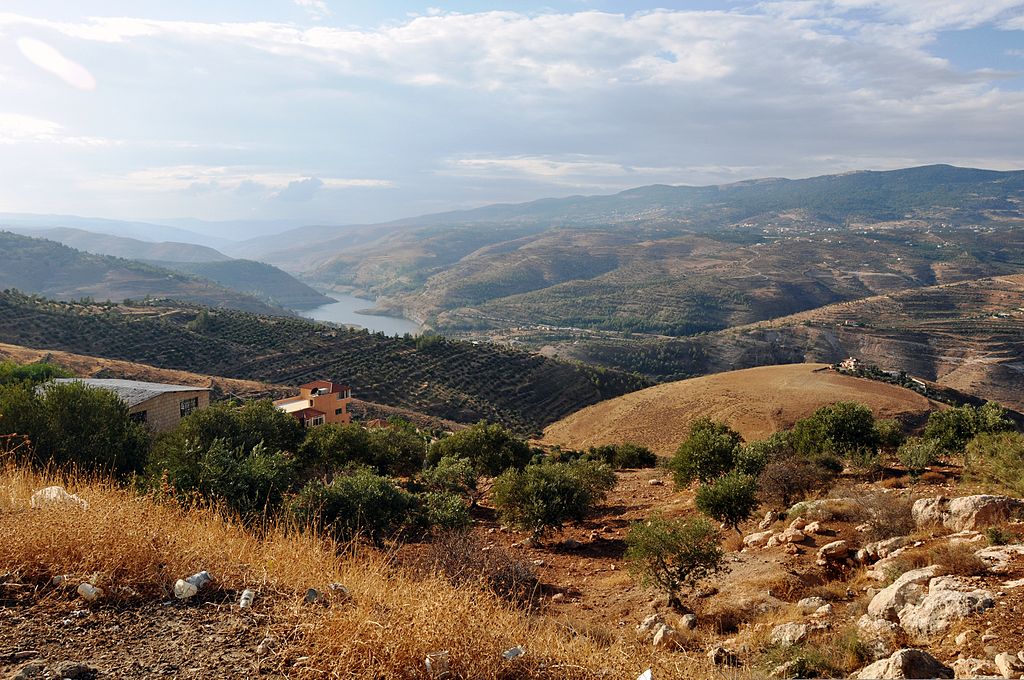
And while we continued to drive in silence and my thoughts went to the parents of Eyal, Naftali, and Gil’ad, I could feel the tears welling up behind my glasses, threatening to obscure my view of Highway 90, which is a voluptuous stretch of highway with an eternally gorgeous view of the Jordan valley. Even at night, the mountains just across the Jordan valley, referred to as the Gil’ad (an ironic view for the piece of news which had just arrived) were distant, haunting, calling to me across an ancient river and a modern and much-politicized border.

What can we do in times of loss like this? Are we helpless?  How should our faith help us in times like these both spiritually and practically?  What is the appropriate Jewish response?

One answer is to gather solemnly to recite words from our tradition. I think the experience that many of us had this past Tuesday evening, when members of this community came to Ma’ariv to memorialize the three slain young men, was cathartic.  We need to be among our own, we need community, to surround ourselves with those who understand our grief, who understand why we are so personally moved by a tragedy so far removed from us physically.
As Oryah and I drove through the center of Israel Monday night, Israelis interviewed on the radio said things like, let’s let Tzahal / the IDF do what we know they can do - i.e. root out all the Hamas terrorists hiding in the territories and kill them as enemy combatants or round them up and imprison them.

Unfortunately, over the course of the week, the situation worsened. Ladies and gentlemen, we are entering very dark times. As of yesterday, the Israeli police had not declared who killed Muhammed Abu Khdeir, the 16-year-old resident of Shuafat who was murdered and whose body was desecrated following the revelation about the three Israelis, and I am really, really hoping that it was not one of us.

We are not a bloodthirsty people. We are not hooligans. We are not terrorists.

The response, ladies and gentlemen, should be to draw on key Jewish values. We cannot allow the purveyors of terror to pull us down into the swamp with them. We must abide by the law and our morals.  We should not ignore or forgive, but we should respond as Jews.   

On Thursday, I was on a conference call organized by the Rabbinical Assembly, the international organization of Conservative rabbis. Rabbi Brad Artson, who teaches at American Jewish University in Los Angeles, shared some thoughts about how we should respond to the tragic slaying of Naftali, Gil’ad, and Eyal. His position is that we need to reiterate our commitment to four general principles highlighted in the Torah. They are:

1. Ahavat Tziyyon, love of Zion and Israel.
2. Kevod HaBeriyyot, maintaining human dignity.
3. Tzedeq, Tzedeq Tirdof, valiantly pursuing justice.
4. Rodef Shalom, pursuing peace.

Ahavat Tziyyon. We are one nation, and we share a destiny with the State of Israel, built on the Land of Israel. We all agree that we have a natural, historical right as Jews to our own self-determination, and therefore our own state, which the world must acknowledge and support.

Kevod HaBeriyyot. The first time that the word “Torah” appears in the Torah (Ex. 12:49) is a statement that you shall have one Torah for you and for the non-Israelites in your midst. That is, everybody is subject to the same laws, the same equal treatment, the same rights, the same ability to pursue life, liberty, and happiness, and that goes for all people between the Jordan and the Mediterranean.

Tzedeq Tzedeq Tirdof. We have an obligation to seek justice in all its forms. On a micro level, that means that murderers should be prosecuted. On a macro level, that means that we are obligated to protect ourselves when necessary, including taking out terrorist infrastructure. When we must go to war, the Torah is clear: we must go to war. But ultimately our goal is to arrive at peace, which brings us to…

Rodef Shalom. It is our obligation to seek peace, and we should work hard to bring it about. Working toward peace - treaties, security arrangements, trade, international borders, all of the thorny issues that this implies - is a positive mitzvah in our tradition. That does not imply that we merely have to roll over and be passive and give away huge chunks of land and security for peace. But it does mean that we are commanded to work towards peace tirelessly and wisely.

Peace must be just, must reflect our values, must include safety and security for all citizens, and must maintain human dignity for all.

Those are the four principles. But how can we put them into practice?

There are some in the Jewish world who feel that the only way to ensure that justice is served is through military engagement. Certainly, when there are rockets being launched from Gaza into Israel, the Jewish state has no choice. As I wrote this, the New York Times reported that Israel was massing troops on the border of Gaza, perhaps for some kind of “operation.”  This should not, of course, be understood as revenge, as some reports implied, but as security. Israel needs to make sure her citizens are safe.

We should be extremely careful not to allow our grief to cascade into angry calls for revenge. Regarding the use of force, we should always be on the defense, not on the offense. Great military minds may disagree; there are legitimate times when you must strike first. But the complicated nature of this situation calls for caution. At the negotiating table, however, we should leap into battle and not wait for something to happen. In my mind, that would strike the correct balance between the four values that Rabbi Artson raised.

We are a people that prays for peace daily. Oseh shalom bimromav, hu ya’aseh shalom. And more “operations” will not bring us more peace. On the contrary, we need not only to pray for peace, but to work at it with all of our being. Rabbi Adin Steinsaltz, an Israeli Chabad rabbi generally recognized as the greatest living Jewish scholar, suggested the following response:

It is true that we do have the right to fight in order to protect our lives, and to kill in a war of self-defense, as well as to punish the perpetrators.

But while revenge responds to a human need (however natural and normal the impulse), it is not in our hands: "Vengeance is Mine, and recompense," says the Lord (Deuteronomy 32:35)...

What, then, can and should we do?

We should do Kaddish.

In saying Kaddish over the dead, we promise to fill the gaps created by their passing, and to continue doing whatever we can so that "His great Name may grow exalted and sanctified."

But saying that is not enough: each and every one of us should also act as best he or she can in order to do Kaddish – by studying more Torah, by fulfilling one more mitzvah, by our physical actions or by giving of our time and money to those in need. Our acts do not serve to elevate the souls of these boys – for they are in a supreme spiritual level that needs no further elevation. Our acts elevate our own souls, curing all the lacks that were and still are in our world.

Rabbi Steinsaltz says that we should focus our energies not on revenge, but on returning to tradition, on improving ourselves, on elevating our souls. I would add that we should return to the negotiating table.

Furthermore, I would also add that we should draw inspiration from the prophet Micah, whose staggeringly-beautiful words we heard chanted this morning. The haftarah concluded with (6:8):

הִגִּיד לְךָ אָדָם, מַה-טּוֹב; וּמָה-יְהוָה דּוֹרֵשׁ מִמְּךָ, כִּי אִם-עֲשׂוֹת מִשְׁפָּט וְאַהֲבַת חֶסֶד, וְהַצְנֵעַ לֶכֶת עִם-אֱלֹהֶיךָ
He has told you, O man, what is good, and what the Lord requires of you:Only to do justice, and to love goodness, and to walk modestly with your God.

We have to walk modestly with God, and not speak arrogantly of violence. We have to maintain our principles: Jewish nationhood, human dignity, justice and peace. And we have to seek to elevate our souls. As painful as this episode has been, we cannot call out for revenge. We need to take care of our people, to bring the guilty to justice, and seek a solution for all the young men and women of this world.

Am Yisrael Hai. The nation of Israel lives.

~
Rabbi Seth Adelson
(Originally delivered at Temple Israel of Great Neck, Shabbat morning, July 5, 2014.)

Tuesday, June 3, 2014

The Torah of Moderation - First Day Shavuot, 5774

Today we celebrate Matan Torah, the giving of the Torah on Mt. Sinai.

Usually, when we mention the “giving of the Torah” or the “receiving,” we are talking about God to Moses, or God to the Jews. But really we should understand this as the gift from the Jews to the world.

Because if there is one thing that we can proudly point to as Jews and say, this is ours, it’s the Torah. Not, of course, the Torah alone, but “Torah” in the wider sense of that word: incorporating the millennia of commentary and interpretation based on and illuminating the Five Books of Moses and the rest of the Tanakh, the Hebrew Bible. We have shared that wider gift of Torah with the world.  


And this distinction, between the written Torah and all of its interpretation is essential. ‘Cause let’s face it: the Torah is a complicated book. Yes, there are many wonderful Jewish values that originate in the Torah: welcoming guests (Genesis 18:1-8), taking care of the poor among us (many places, including Leviticus 19:9-10), treating the strangers among us fairly (many places, including Lev. 19:33-34), business ethics (e.g. Lev. 19:13, 35-36ת Deut. 25:13-16), and so forth. But there are many items in the Torah that challenge us as modern, thinking people. Consider for a moment some of the more extreme positions that the Torah takes:

    A disobedient son should be put to death. (Deut. 21:18-21)
    One who violates the Shabbat in public (e.g. by gathering wood) should be put to death. (Num. 15:32-36)
    The Sotah ritual (Numbers 5)

And so forth. But it is essential to note that the Torah alone is not Judaism! Our tradition is not about the literal application of the words of the Torah. We do not put anybody to death or practice humiliating rituals. The rabbinic tradition, through a process that began in the 2nd century CE and continues to this very day, has studied the words of Torah, interpreted them and codified them according to contemporary norms in every generation.  What we know, understand and practice as Judaism is not the written Torah, but rather, as it is filtered through the rabbinic lens. We are not ancient Israelites; we are rabbinic Jews.

For example, we do not stone disobedient children to death, even though that is clearly commanded in the Torah. The rabbis of the Talmud (BT Sanhedrin 68bff) re-interpreted the very concept of what it means to be disobedient to set the bar so high that it would actually be impossible for a child to meet this qualification, thereby mitigating the severity of the Torah’s imperative.

When I was at the Rabbinical Assembly convention two weeks ago, I participated in an extended learning session with Rabbi Donniel Hartman of the Shalom Hartman Institute in Jerusalem, on the subject of the precedence of certain mitzvot over others. For example, the Talmud tells us (Berakhot 19b) that if you discover that you or somebody else is wearing an item of clothing containing a forbidden mixture of fibers (e.g. wool and linen; aka shaatnez), you must tear it off immediately. One page later, the Talmud tells a story about a certain R. Ada bar Ahavah who, upon seeing a woman in the market wearing a headress which he thinks to contain shaatnez, and knocks it off her head, causing the woman much shame and stirring up a major hubbub. As it turns out, she’s not even Jewish! So R. Ada bar Ahavah is in the wrong, and has doubly transgressed.

In some places, our tradition upholds a certain kind of zealotry. But elsewhere, we find that the intricacies and sensibilities of human relationships require more attention than the letter of the law. Elsewhere in the Talmud (Megillah 3b) we find that the rabbis ask about the priority of certain mitzvot. If one is faced with taking care of an unclaimed corpse (known as a met mitzvah) versus reading Megillat Esther on Purim, the met mitzvah takes precedence, due to the principle of kevod haberiyot, the respect for all God’s creatures. Furthermore, the Talmud emphasizes that this latter mitzvah, respect, is of such great importance that it outweighs all negative commandments of the Torah.

Rabbi Moshe ben Nahman, aka Nahmanides or Ramban, who lived in 13th-century Spain, cites a verse in the Torah to extend this logic even further (Deut. 6:18):

וְעָשִׂיתָ הַיָּשָׁר וְהַטּוֹב, בְּעֵינֵי ה' --לְמַעַן יִיטַב לָךְ, וּבָאתָ וְיָרַשְׁתָּ אֶת-הָאָרֶץ הַטֹּבָה, אֲשֶׁר-נִשְׁבַּע ה' לַאֲבֹתֶיךָ.
Do what is right and good in the sight of the Lord, that it may go well with you and that you may be able to possess the good land that the Lord your God promised on oath to your fathers.

Ramban tells us that this verse is a kind of legal catch-all that covers every detail of human behavior that is not otherwise addressed in the Torah - that is, that we should go beyond the letter of the law. This is a principle known as “lifnim mishurat hadin.” We are not only obligated to fulfill the mitzvot that are explicitly identified, but also to extend the logic of what is right and good to everything else. Ramban tells us that we must refine our behavior so that our reputations are spotless, and that our conversations with others are always pleasant, so that we may be worthy of being known by others as “right and good.”

Returning for a moment to the case of the R. Ada bar Ahavah, who knocks off the woman’s headress in the market, since he has violated kevod haberiyot / respect for all God’s creatures and damaged his reputation, he has therefore transgressed. Sometimes respect trumps the letter of the law.

Ladies and gentlemen, this is the moderation for which we stand, for which the greater Torah stands. And this is the gift that we Jews bring to the world, the very gift that we celebrate today. We are not zealots; we are not fanatics. The ancient rabbis, and even some of us today want us to be sensitive to how we behave while fulfilling the law, and make sure that it reflects well upon us. We must not just perform mitzvot, but must do it in a respectful way that maintains our reputations.

The Talmud (Yoma 86a) also identifies for us the label applied to those who claim to act in the name of God but are in fact profaning God’s name. The term for this is hillul haShem:

But if someone studies Scripture and Mishnah, serves Torah scholars, but is dishonest in business, and discourteous in his relations with people, what do people say about him? Woe unto him who studied the Torah; woe unto his father who taught him Torah; woe unto his teacher who taught him Torah! This man studied the Torah; look how corrupt are his deeds, how ugly his ways.

It is certainly possible to follow the letter of the law and still commit hillul haShem. We need not look too deeply into the Jewish world to see plenty of examples.

Last week, when the rabbinic head of the Agudath Israel, an umbrella organization of Haredi Jews, Rabbi Yaakov Perlow, was giving a brief devar Torah at a celebratory dinner attended by Mayor Bill DeBlasio. He used his opportunity to slander non-Orthodox Jews (and some Modern Orthodox Jews as well). From the New York Times:

Rabbi Perlow offered a shower of condemnation for Reform and Conservative Jews, who he said were among those who “subvert and destroy the eternal values of our people.” These movements, he said, “have disintegrated themselves, become oblivious, fallen into an abyss of intermarriage and assimilation.”
“They will be relegated,” he added, “to the dustbins of Jewish history.”
It was surely a deliberate choice to deliver these words when the mayor was present, because he knew that there would be media coverage, and the bulk of New York Jewry, who he knows are not Orthodox, would read his words. He also knew that Mayor DeBlasio would likely let the remarks go by without comment, which he did.

Just two days later, the same Rabbi Perlow delivered a speech to 10,000 women in his community about the dangers of the Internet. And what’s more, he spoke to them separated from his audience by a one-way mirror, so he could not see the women. That’s right - he actually spoke while looking at himself in the mirror. The possibilities for commentary here are endless.

The moderate conception of Judaism which we emphasize values women and men equally and does not see women merely as sources of temptation that must be obscured from view. This is not how women are perceived outside the synagogue, and it should not be that way on the inside.

Ladies and gentlemen, the Torah is not black and white, to be fulfilled to its letter at the expense of others. Doing what is right and good in the eyes of God means that we acknowledge not only the ethical norms of the society in which we live and the innovations that human ingenuity has brought, but is also respectful of all. What sort of people would the Jews be if we stuck our heads in the sand? How would we fulfill our mission on Earth of bringing this Torah of moderation to the world if we cannot even look at people?

Our task as Conservative Jews is to live our ideals proudly and boldly, continuing to emphasize the voice of moderation, of kevod haberiyot / respect for God’s creatures, that is evident in the wider Torah, for the Jews and for the world. We must remind the Rabbi Perlows of this world that the Second Temple was destroyed due to sin’at hinam, causeless hatred, and that the only path that we have together into the Jewish future is one of mutual encouragement and honor, one based on maintaining the good reputation and the pleasant conversation that Ramban suggests.

Hag Sameah!


~
Rabbi Seth Adelson
(Originally delivered at Temple Israel of Great Neck, first day of Shavuot, June 4, 2014.)

Friday, May 23, 2014

The Two Keys to the Jewish Future: S + T = J (Bemidbar 5774)

I cannot look at the beginning of Bemidbar / Numbers, with its census figures of the twelve tribes, and not think about where we are as a people. I cannot help but think of the lot of demographic studies of Jews in the New York Area and nationwide of the past several years, most of which reveal shifts in measures of engagement, affiliation, and intermarriage that do not bode well for the future of Judaism in America, particularly non-Orthodox Judaism. I cannot help but wring my hands, as we have collectively done as a people for a long time.

I ask myself, “What will maintain us as a people? What will preserve our fundamental distinctiveness?” Many of you know that this is the question that keeps me up at night.

And when you read the numbers in the opening chapters of the book of Numbers, you see that we have been obsessed with the quantitative measures of our nation from its very inception. An extended family of 70 people went down into Egypt; two million emerged from slavery as a people, Am Yisrael. A million of our number were expelled from Spain in 1492, and perhaps as many remained as New Christians; six million died in the Shoah; the State of Israel was established by half a million mandate-era residents of Palestine. There are roughly five million of us here in America today.

We are captivated with counting ourselves, and the demographic bug afflicted us heavily when it emerged in the late 19th century as an outgrowth of the Zionist movement in Russia, and in particular the work of the great Jewish historian Shimon Dubnow, who established the Jewish Historical Ethnographical Committee of the Society for the Promotion of Culture Among the Jews of Russia in 1892.

We are not only fascinated with documenting and counting ourselves, but we are also continually convinced that we are on the verge of disappearing. (I noticed with interest this week that the Mashadi community, not by any stretch of the imagination in danger of evaporating, issued a taqqanah about not allowing converts to be a part of their community, similar to that issued by the Syrian Jews in Brooklyn in 1935.)

The Zionist philosopher and historian Shimon Rawidowicz labeled us “the Ever-Dying People,” and published a book by that name in 1948. (Rawidowicz, BTW, was also the editor of a collection of Dubnow’s essays and letters.). He wrote:
“The world makes many images of Israel, but Israel makes only one image of itself: that of a being constantly on the verge of ceasing to be, of disappearing.”
These ideas are built into our liturgy and our theology. On weekdays, when we recite the words of tahanun (“supplication”), we chant somewhat mournfully:  
Shomer Yisrael, shemor she’erit Yisrael. Guardian of Israel, protect the remnant of Israel.”
It is no wonder that even today we obsess about our nascent disappearance; we are hard-wired to do so.

A Talmud professor of mine at the Jewish Theological Seminary, Dr. David Kraemer, once enlivened our class with a sidebar discussion about Jews and their attachment to Judaism. He noted that there have been times in our history when we have been more committed and engaged to living a religiously-Jewish life, and times of lesser commitment. We have survived periods of oppression, war, intermarriage, conversion away and assimilation and really all the the same issues that we face today. There is really nothing new under the sun, suggested Dr. Kraemer, and so why should we worry? “Should our children be permitted to celebrate Halloween?” we wondered. “Why not?” offered Dr. Kraemer. We rebutted with, “What about Christmas?” He gave us a wry smile, and quietly said (something like), “We already do.”

He was not talking about modern Jews adopting Christmas from their Christian neighbors, but that Hanukkah, like Christmas, is an echo of the festivals adjacent to the winter solstice that many ancient agrarian societies celebrated. Yes, our rabbis gave it a new name, a new backstory, and so forth, but fundamentally it is the same holiday.

Dr. Kraemer’s point was that we have always managed to maintain our peoplehood and traditions, whatever the outside world has thrown at us.

So what is it, then, that has worked about Judaism? Why are there still 14 million or so Jews in the world, when we could have disappeared many times over?

It can only be the strength of our heritage, the value of our teachings, the compelling nature of our rituals.

Yes, ladies and gentlemen, we have a rich, varied, and powerful tradition, one that speaks to people even in these vastly secular, disinterested times.

We have to overcome our fears regarding assimilation, and live Jewish lives of quiet confidence and commitment. And how do we do that? By focusing on our core of active participants, by strengthening the core of our community, and by creating a communal experience that is so compelling that it will draw more people in. And I think we can do so by invoking three essential concepts in Jewish tradition, the themes of the Shema section of Shaharit, which we recited this morning (as we do every morning). Those essential themes are: Creation,  Revelation, and Redemption.

Creation is, of course, about the traditional week, the six days in which God metaphorically created the world, followed by Shabbat. It’s about not only the natural environment that we inhabit, but also the rhythm of the Jewish week.

Revelation is an intimidating (and, let’s face it, goyish-sounding) word referring to our receiving of the Torah (which we will commemorate in a mere 11 days on Shavuot). It’s our national story, the basis for our rich textual heritage.

The classic sense of redemption is that God took us out of Egypt, setting us free from slavery.  However, when we talk about that ancient redemption, we are also hinting at a coming redemption. And we make that connection every morning in Shaharit.

Ladies and gentlemen, those three concepts are not just a series. They can also be read as an equation (and here is where Numbers creeps back into the discussion):

Creation + Revelation = Redemption

In an effort to make this easier to remember, I’m going to abbreviate it as follows:

S = Shabbat, i.e. Creation
T = Torah, i.e. Revelation
J = the Jewish future, i.e. Redemption

Hence, 

S + T = J

That’s it, ladies and gentlemen. Let me explain what I mean.

I took a couple of journeys within the last two weeks; the first was to the convention of the Rabbinical Assembly in Dallas, where I learned a whole lot of Torah, reconnected with colleagues, and reminisced about the five years I spent living in Texas. Talmud Torah, engaging with the words of our ancient tradition, is not only the greatest mitzvah among the 613 (see Mishnah Peah 1:1); it is also refreshing. We recited this morning in Pesuqei Dezimrah this morning (Psalm 19:8) “Torat Adonai temimah, meshivat nafesh.” God’s Torah is perfect, restoring the soul.

Torah, revelation, is not just refreshing to me; it is in fact what has sustained us through centuries of dispersion, oppression, and destruction. If it were not for the Torah, we might have evaporated after the First and Second Temples were destroyed. The Torah contains not only the mitzvot, but also our national story, our heritage, and our secret to everlasting peoplehood. It is greater than the sum of its parts.

But the other half of the equation is Creation, and that speaks to the second journey I took. Right after returning from Texas, my family and I drove up to Camp Ramah in the Berkshires for the second annual Vav Class Family Retreat, where Danny Mishkin and Rabbi Roth and I facilitated a phenomenal Shabbat experience for thirteen member families. What has made this program work so well now for two years running is, primarily, the simplicity of Shabbat. In camp, we observe Shabbat traditionally, including tefillot, festive meals, games, learning, discussion, and other Shabbat-friendly activities. We discourage the use of electronic devices, and of course there is nowhere to travel to and nothing to spend money on. The results are truly beautiful and inspiring.


What makes Shabbat work is that it is a great “reset”-button. It is a chance to reconnect with family, friends, and Creation. And what better place to do that than in camp? And, as if to heighten that experience, all of our tefillah experiences were held outdoors. Synagogue buildings can of course be inspiring places to communicate with God, but davening outside brings a heightened kavvanah.

For minhah on Shabbat afternoon, we first read Torah, as is traditional. Then, after the Torah was returned to the ark, we took a walk out into camp to sensitize ourselves to the beauty of Creation found all around us. We completed minhah by reciting the Amidah in a field, standing far apart from one another to recite the words of tefillah alone with God and nature. Some of us found it very moving.

Shabbat brings us back to Creation. And, moving forward, this will be an essential part of our work here on Earth. At the ordination/investiture ceremony for new rabbis and cantors at the Jewish Theological Seminary this past week, Dr. Arnold Eisen, the Chancellor, made the following remarks:
“I strongly suspect that the mitzvah on which our ultimate worth and future turns—yours and mine—may well be that of preserving God's creation. ’Tending the garden’ means something different than it ever has before, now that the survival of the planet is in question.”
Shabbat and Creation go together. And Creation + Revelation = Redemption. S + T = J.

So what is this redemption? It is that we will merit an infinite future on this planet, which God has created.
   
Ladies and gentlemen, Jews and Judaism have existed on this planet for millennia, and we will continue to exist. Our redemption is our continuation. We have outlasted the Babylonians, the Romans, and a host of other civilizations. All we have to do is keep the ideas of Creation and Revelation in front of us, and the future will glisten with the power of Torah, of Shabbat, and of a healthy planet to sustain us.

Shabbat Shalom.


~
Rabbi Seth Adelson
(Originally delivered at Temple Israel of Great Neck, Shabbat morning, 5/24/2014.)

Thursday, May 22, 2014

On Derekh Eretz and Being Refreshed in Texas

I lived in Texas for five and a half years, earning an M.S. at Texas A&M University (Go Aggies!) and then working in steamy Houston for a huge, multinational engineering and construction firm. When I returned to Dallas last week for the annual convention of the Rabbinical Assembly, the international professional organization of Conservative / Masorti rabbis, I was flooded with memories of my time in Texas, and particularly that Texans LOVE air conditioning, and prefer it to be blowing on them on full blast at all times. So while the weather outside the Dallas Hilton was pleasant and not too hot, inside it felt like March in Iceland.
 
Nonetheless, the company was warm, and the material was hot. I had a few shiurim with one of my beloved Bible teachers from the Jewish Theological Seminary, Dr. Walter Hertzberg, who laid out a stunning array of traditional commentaries for us to sample and draw on. I heard sessions on crafting new, engaging tefillah experiences (a particularly timely talk with respect to our process here in Great Neck), reaching out to so-called Millennials and Gen-Xers, expanding adult learning options. 

I also participated in a stellar four-hour marathon examination of textual sources with Dr. Donniel Hartman of the Shalom Hartman Institute in Jerusalem (where Rabbi Stecker is sabbatical-ing in July) on the tension between fulfilling God’s word and moderating some of the extreme halakhic positions found in the Jewish canon. Maimonides, for example, notes in his halakhic compendium, the Mishneh Torah (Laws Pertaining to Acquisition 9:8), that while the Torah permits one to order your Canaanite slave perform excruciating labor, it is more important to treat slaves justly and mercifully. Not that slavery of any kind today is permitted or encouraged in any way, but the wider point that Maimonides makes is that even within the letter of the law there is an obligation to treat others with respect and dignity, even if it may contradict the fundamental understanding of the written and oral Torah. This wider message is essential for the work that we do in the Conservative movement: halakhah (Jewish law) is valuable and binding, but must also be moderated by derekh eretz (respect) as well as contemporary sensibilities.

The convention atmosphere was bullish on the future, and as we welcomed a new president of the RA, Rabbi William Gershon of Congregation Shearith Israel in Dallas, speeches were made about the vitality of the Conservative movement and the bright spots that lay ahead despite the well-known challenges that we face. While my own optimism has been occasionally challenged by the relentless stories of the movement’s decline that may be found in virtually any Jewish newspaper, I always find my spirits buoyed by fellowship with colleagues. To hear about the inspired work that my colleagues and Seminary buddies are bringing to their individual congregations is always encouraging, and so I return with not only new insights to offer as divrei Torah, but also a list of hot new ideas that have succeeded in other communities.

Put succinctly, we’re not dead yet. My rabbinic colleagues and I are still working to engage, inspire, and enlighten our kehillot (congregations), and to do it in a way that reflects our positions of moderation and derekh eretz. I look eagerly to the future with a renewed sense of purpose.


~
Rabbi Seth Adelson
(To be published in the Temple Israel Voice, 5/29/14.)