Friday, May 22, 2015

The Desert Still Speaks to Us - Bemidbar 5775

One night in 1999, while I was living in the small Israeli city of Arad, I took a hike in the desert by the light of the full moon with a few friends. We had no flashlights. Maybe one of us had a cell phone. But that was truly one of the most beautiful hikes I have ever taken (and I’m an avid hiker, so that’s saying a lot), over the rolling hills of Judea and through a wadi, a dry riverbed. The moon provided ample light, once our eyes were adjusted, and I had the sense of ancient-ness, the primitive nature of this moonlit walk, in which the desert landscape stood out in bold relief against the dark blue shadows.

Was it dangerous? Maybe. Foolhardy? Probably. We had been given clear directions by our madrikh, a fearless young man from Arad named Yoni, who was skilled in guiding hiking, climbing, and camping trips of all sorts. But Yoni could not join us that night, so we were just a bunch of naive Americans twenty-somethings marching silently through the eerily powerful light, quietly challenging ourselves and hoping that nobody tripped and fell or got stung by a scorpion or ambushed by one of the seven remaining Arabian leopards in Israel.


No such horror occurred. But it was a transformational experience, one which I will probably never be able to repeat.

The desert speaks to me. Really, it speaks to all of us.

We started a new book of the Torah today, the fourth book: Bemidbar Sinai (in English, it is Numbers, which is a very poor title, since the numbers are really only found in the opening chapters. Then it gets much more interesting). Bemidbar is entirely set in the desert, as the Israelites are between the Exodus from Egypt and the arrival in Israel. The story of our wandering in the desert is as essential to who we are as the Exodus. We are a desert people. We received the Torah in the desert. Our patriarchs lived in the desert. Our prophets received their prophecy in the desert.

In the desert, you need stories to connect you to civilization. You need to connect where you have come from to where you are going. This is an essential part of who we are as Jews - we need those connective stories, which bring us together, which keep us committed to who we are.

The Torah is a desert document. Not only did we receive it in the Sinai desert, but we also actually had to leave the fleshpots of Egypt (see Exodus 16:3), the lush green of the Nile delta, and prepare ourselves as a people by purifying our physical and spiritual selves for three days in the desert before receiving it.

The story of Moses concludes in the desert; Moshe Rabbeinu, our Teacher, never enters the Fertile Crescent. And the prophets who follow him are desert-dwellers; Isaiah, Ezekiel, Jeremiah, and the whole gang drew all of their prophecy from the power of the wilderness. For example, the haftarah we read on the Shabbat after Tish’ah Be’Av, known as Shabbat Nahamu, the Shabbat of comfort, includes the following (Isaiah 40:3, Etz Hayim p. 1033):
קוֹל קוֹרֵא--בַּמִּדְבָּר, פַּנּוּ דֶּרֶךְ ה'; יַשְּׁרוּ, בָּעֲרָבָה, מְסִלָּה, לֵא-לֹהֵינוּ.
Qol qore bamidbar: panu derekh Adonai; yashru ba’aravah mesillah leloheinu.
A voice rings out: “Clear in the desert / A road for the Lord! / Level in the wilderness / A highway for our God!
And what does this Heavenly voice say? (Is. 40:6-8)
כָּל-הַבָּשָׂר חָצִיר, וְכָל-חַסְדּוֹ כְּצִיץ הַשָּׂדֶה... יָבֵשׁ חָצִיר, נָבֵל צִיץ; וּדְבַר-אֱ-לֹהֵינוּ, יָקוּם לְעוֹלָם.
Kol habasar hatzir, vekhol hasdo ketzitz hasadeh… Yavesh hatzir, naval hatzitz, udvar Eloheinu yaqum le’olam.
“All flesh is grass / All its goodness like flowers of the field… Grass withers, flowers fade - / But the word of our God is always fulfilled.”
What I felt as I was walking through the desert in the moonlight, listening to that quiet wind, was the eternality of that scene. The desert is the same as it always has been, as it always will be. Just as the desert is eternal, so too is God eternal, so too is the Torah eternal, so too is the burning fire of desert heat; the unconsumed, flaming bush that Moses found in the desert is still burning. A hint of it is in that light up above the ark.

You may know that the logo of the Jewish Theological Seminary, the primary rabbinical school and teaching institution of the Conservative movement, is a stylistic rendering (!) of the burning bush.

http://jtsa.edu/images/jts_nav_logo.png

One idea that this symbol suggests is the eternal nature of God’s revelation, of God’s voice coming through to us. Our movement grew out of a group of 19th-century German-Jewish scholars known as the Positive-Historical school, and among the principles they espoused was the idea that history is an essential player in Judaism, that our traditions, our customs, our law - in short, our Torah - have continued to develop and change throughout the centuries. We have never read our text devoid of its historical context. And we continue to hear God’s voice, in our contemporary context, as we strive to interpret the Torah for today, acknowledging that although the ancient voice still comes from the desert, the rest of the world has changed

As contemporary Jews, with an eye toward history and the continuous unfolding of revelation, we continue to draw on the inspiration of Abraham, who pitched his tent near Be’ersheva, and welcomed in visiting angels in the desert. We continue to learn from the complaints and misbehavior of our ancestors as they trudged across the wilderness for forty years, driving Moses to the point of anger and thereby denying him from ever leaving the desert.

Once again, Isaiah tells us (12:3):
וּשְׁאַבְתֶּם-מַיִם, בְּשָׂשׂוֹן, מִמַּעַיְנֵי, הַיְשׁוּעָה.
Ush’avtem mayim besasson mima’ayanei hayeshu’a.
Draw water in joy from the wells of salvation.
That is, the desert wells, from which spiritual nourishment continues to flow.

And hence the need for those ancient stories. Without our desert connection, we would be rootless. Hence the power of the State of Israel for us today. This is, perhaps, why David Ben Gurion insisted that he be buried in Sde Boqer, south of Be’ersheva, deep into the Negev.

Another brief memory: When I visited Israel for the first time at age 17, I remember being on a tiyyul in the desert south, hiking through Wadi Tzin, just south of Sde Boqer. Our teacher told us that this was the place where Moses struck the rock in anger to placate the Israelites, who were dying of thirst. I was positively blown away. How cool is that?

Did it really happen that way? I cannot say; I wasn’t there. But the very presence of this story, the residual vibrations after thousands of years, crept into my soul and have lodged there since. The desert stories are timeless and powerful.

And here’s another: not far from that location, at the “Bedouin tent” lodging for tour groups called “Khan HaShayarot,” Danny Mishkin and I took our Youth House group outside of the camp under the stars when we were there last year for a ma’ariv service in the desert that blew them all away. The desert is powerful, mystical; it resonates with stories. Its very emptiness enables you to hear yourself in the quiet wind.

The Slonimer Rebbe, Rabbi Shalom Noah Berezovsky, a 20th-century Hasidic rabbi, taught that the reason the Torah was given in the desert is because we can only merit the true acquisition of Torah when we have canceled all of our attachment to material things.

That is why we stay up late tomorrow (Saturday) night for our Tikkun Leyl Shavuot, a night of dedication to our history, our textual heritage. The first night of Shavuot is a time that we put our physical desires aside to listen for that still, small voice emanating from the desert, calling to us from the wilderness.

Shavuot is not just a celebration of the receiving of the Torah. It is a joyous time, on which we eat sweet, rich dairy foods to recall the sweetness of Torah and its connection to the land flowing with milk and honey. But it is also a sober festival, a reflective stretching of the mind to reconnect with our national tales, to bring us back, in some sense, to Mt. Sinai.

I hope that you will be joining us as we consider new perspectives on the Torah, which will connect our ancient words with who we are today. Come with us as we return, just for an evening, to the moonlit desert, to the burning bush, and to our unfolding tradition.


~
Rabbi Seth Adelson
(Originally delivered at Temple Israel of Great Neck, Shabbat morning, May 23, 2015.)

Thursday, May 7, 2015

Responding With All Your Might: A (Post-) Lag Ba'Omer Thought

Lag Ba'Omer*, the 33rd day of the counting of the omer (the 49-day period from Pesah to Shavuot), marks a joyous occasion in the midst of an anguished period of Jewish history. The Talmud (Bavli Yevamot 62b) tells us that this period was marked by a plague in the 2nd century CE which took the lives of 24,000 students of the great sage Rabbi Akiva. Only a handful survived, among them Rabbi Shim'on bar Yohai, considered by some to be the father of Jewish mysticism. As such, Lag Ba'Omer has become in recent years a celebration of Shim'on bar Yohai: tens of thousands of Haredim march from Tzefat, in northern Israel, to Mount Meron, where bar Yohai is traditionally thought to be buried, and light bonfires to honor his legacy.

... holiday is known as Lag b ' Omer . The mourning practices of the omer

I was once at the grave of Rabbi Shim'on bar Yohai, not on Lag Ba'Omer, and experienced there the most peculiar behavior that I have ever witnessed in the context of tefillah / Jewish prayer. It was an otherwise ordinary afternoon, and there was a standard pick-up minhah (brief afternoon service) going on nearby, attended by a handful of guys who seemed to be from the same Haredi sect.

They arrived at the end, and one of them began saying the Mourner's Kaddish, the prayer recited by those who have recently suffered a loss or are recalling the annual observance of a relative's passing. They came to the congregational response, usually similarly intoned in a spoken-word form - no music, marking the mourner's sadness. And then something truly wacky happened: all of the assembled began to SHOUT WITH ALL THEIR MIGHT, "Amen! Yehei shemei rabba mevarakh le'alam ul'alemei alemaya!" "May God's great name be praised throughout all time!"

I think I jumped. I had never heard anything like that.

A few years later, as I was studying liturgy seriously at the Jewish Theological Seminary, I encountered a real gem of Talmudic wisdom, and experienced a brief moment of revelation (Bavli Shabbat 119b):
אמר רבי יהושע בן לוי: כל העונה אמן יהא שמיה רבא מברך בכל כחו ־ קורעין לו גזר דינו
Rabbi Yehoshua ben Levi taught: One who says, "Amen! Yehei shemei rabba mevarakh..." with all his strength, any [negative Divine] decree against him is torn up.
In other words, if you scream this line when responding to a mourner, you get a whole lot of Heavenly credit, and a guaranteed place in the world to come. I realized, in retrospect, that this is exactly what was going on during that otherwise ordinary minhah: they were taking this piece of wisdom literally.

I do not necessarily recommend shouting in synagogue. Depending on the congregation, the reactions by others might vary from discomfort to shock to bodily removing you from the building. But we might want to think, not only as we respond to those in mourning but throughout our tefillah, about Rabbi Shim'on bar Yohai, about the bonfires of the soul, and about pouring all our might into forming those words of prayer.

~
Rabbi Seth Adelson

* "Lag", ל''ג, is not a word but a number: the Hebrew letter lamed has a numerical value of 30 and the gimmel a value of 3.


Thursday, March 12, 2015

Why You Should Vote MERCAZ

As you know, I am strongly attached to the land, the people, and the State of Israel; last year I was there no less than four times. In my late 20s, I was so close to making aliyah that I was interviewing for full-time jobs in Israel. When I decided instead to go to cantorial school, and realized that there was no way to make a living in Israel as a hazzan, I opted to remain here in the Diaspora, although Judy and I are still keeping an eye out for that ideal retirement apartment in Tel Aviv.

As an American Jew, I can’t vote in Israeli elections, and the internal workings of Israeli politics are one degree removed from my immediate sphere of political awareness. However, Israel is different from every other nation in that we Jews who choose to live in Diaspora still have a voice in some of the operations of the ongoing endeavor of building the Jewish state. Our voice is the World Zionist Congress, which will convene next fall in Jerusalem, and the interests of the Conservative movement are represented by our party, MERCAZ (literally, “center”).


MERCA USA

First, a crash course on the World Zionist Congress: This is the same body that was first convened by Theodor Herzl in Basel, Switzerland in 1897. There will be 500 delegates from around the world, and 145 of them will be sent from the United States. Any person that belongs to one of the member organizations of the WZO, and that includes the Conservative movement and hence Temple Israel, may vote. The last vote was held in 2010, and we were allotted 33 seats, as compared with 56 for the Reform movement and 35 for the Religious Zionist (Orthodox) slate. It is notable that Reform’s ARZA claims that Reform-affiliated programs in Israel received $4.3 million in World Zionist Organization funding in 2013, as a direct result of those 56 seats.

Second, why you should vote for MERCAZ: Our platform is available at votemercaz.org, but the major points include support for religious pluralism and freedom in Israel, ties between Israel and Diaspora Jewry, peace and security in Israel, environmental progress, and of course Masorti and Conservative-affiliated programs and institutions. These are all things that we stand for, in Israel and here in Great Neck, and as such it is imperative that we Conservative Jews turn out the vote.

Voting is through April 15th at votemercaz.org. It costs $10, but the potential return for Israel and the Conservative/Masorti movement is much more valuable. (Added bonus: TIGN member Marty Werber is 35th on the slate of delegates. If MERCAZ receives enough votes, he goes to Jerusalem in October to represent us.) If you need a paper ballot, please contact me at Temple Israel. I am a member of MERCAZ and have already voted. Have you?


~
Rabbi Seth Adelson
(Originally published in the Temple Israel Voice, March 12, 2015.)

Wednesday, February 25, 2015

Purim: An Opportunity to Lighten Up

Purim is, arguably, the only Jewish holiday with a built-in sense of humor. If the holidays gathered for a party, Tish’ah Be’Av would be sulking in a corner, Yom Kippur practicing self-denial in another room, and Purim would be a kibbitzing wise-guy, cracking one-liners and elbowing Pesah in the ribs. Not only do we dress in costume and behave raucously on Purim, but even the serious obligation of the day, the reading of Megillat Esther, is supposed to be rapid and funny. Some have the tradition of chanting the different characters’ lines in the story in silly voices. We fold the scroll like a letter, rather than respectfully rolling it. It is the holiday of anti-gravitas, a day of sheer silliness.

Purim 5775 at Temple Israel of Great Neck
And, as if to drive the point home, the climax of the story includes a line that mandates the tradition to lighten up on Purim. When Esther convinces Ahashverosh to issue an edict that the Jews may defend themselves, the response among the Jews is (Est. 8:16):
לַיְּהוּדִים, הָיְתָה אוֹרָה וְשִׂמְחָה, וְשָׂשֹׂן, וִיקָר
Layhudim hayetah orah vesimhah vesasson viyqar.
For the Jews there was light, happiness, joy, and honor.
This is a total reversal of where they had been - from mourning, sackcloth, ashes, and wailing to light, happiness, and joy. And these are things we all need a little more of. In fact, we invoke this line every Saturday night, year-round, as we bid goodbye to Shabbat during havdalah. Why? Because when Shabbat leaves us, we need a little lift, a reminder that although we return to work and the mundanity of the week, we carry a little light and joy with us.

Purim is, of course, the annual mother lode of joy. Megillat Esther, and really the entire holiday, remind us that we all run a regular deficit of joy and humor, and furthermore that we indeed have the capability of bringing those things into the world. Let this day of happiness and mirth remind us that we can bring those things to others every day, that we can share some of our own light, when we have a little extra to spare. Lighten up! It’s Adar.


~
Rabbi Seth Adelson
(Originally published in the Temple Israel Voice, Feb. 19, 2015.)

Friday, February 13, 2015

The Jewish Mission - Mishpatim 5775

When I was young, I did not think too heavily about personal meaning in my Jewish involvement. We were a family of shul-goers and Torah readers, and our Jewish experience was defined by driving the 20 miles back and forth to our synagogue in Pittsfield, MA several times a week for Hebrew school, for Shabbat morning services, and for other types of Jewish involvement. Being Jewish meant showing up; that was the essential means through which we identified.

For many of us who came of age in the 20th century, being Jewish was about joining a synagogue, spending holidays with family, marrying a member of the community, and trying to make it in the New World despite prevalent anti-Semitism. The desire to be connected to a community, to identify with a people and a faith, was what built great synagogues like this one. Identity was defined by membership, and institutions like this were as much about social life and status as about Judaism.

And, as has often been observed, the Jews are just like everybody else, only more so. Robert Putnam, the professor of public policy at Harvard, demonstrates over and over in his book, “Bowling Alone,” that the concept of membership and group participation as an essential part of our identity peaked in the middle of the 20th century and has been on the decline since.

Today, membership is not enough to sustain identity for most people. As I have said here before, the data show that the fastest-growing religion in America is “None.” (Note: not “nun.”) Americans are far more isolated from one another, and often alienated from faith and ethnic groups. We are, as Putnam suggests, bowling alone. The “social capital” that Putnam describes as the glue that held our society together has largely eroded.

The greatest philosophical challenge of our time, and indeed the challenge facing most faith communities, is meaning. Our sense of how we derive meaning from our lives has changed tremendously.


Today, everything is individualized. It’s not about “us.” It’s all about “I” and my iPhone. (This is somewhat i-ronic, since most of us are today carrying devices that connect us into one central data location, where we are little more than bits of information.) The task, therefore, of the American synagogue is to create meaning on a personal basis for all who enter, to attempt to reach the individual heart and soul of everyone in its orbit.

So how exactly do we do this? The Torah gives us a few hints. Today in Parashat Mishpatim, we read the following (Ex. 22:20-21):
וְגֵר לֹא-תוֹנֶה, וְלֹא תִלְחָצֶנּוּ:  כִּי-גֵרִים הֱיִיתֶם, בְּאֶרֶץ מִצְרָיִם.  כָּל-אַלְמָנָה וְיָתוֹם, לֹא תְעַנּוּן.  
You shall not wrong a stranger or oppress him, for you were strangers in the land of Egypt. You shall not ill-treat any widow or orphan.
And there are many other such formulations. Over and over, the Torah exhorts us to pursue acts of hesed, of lovingkindness - for the sojourner among you, the widow, the orphan, the poor, the worker who depends on his daily wages, and so forth.

(BTW, the word “ger,” which in modern Hebrew means a convert to Judaism, is better understood traditionally not as a convert, but as a non-Israelite who lives among Israelites. That is, a ger is a stranger, one without family connections or property, and therefore presence in the margins of society.)

We understand and appreciate the plight of those in need, in all their forms of need, because we came from a needy place. We were subjected to the very worst treatment that humans can concoct. We were slaves, and we emerged from slavery as a nation.

The verse is crying out to us: slavery symbolizes what it means to be oppressed, disenfranchised, downtrodden. We understand this. And the Torah reminds us of this many times; I have not actually counted the number of times that this occurs, but an anecdote floating around out there says that it’s somewhere in thirties. Regardless, it’s far more than the number of times that we are commanded to keep Shabbat or kashrut. (And as you may know, there is no explicit Torah commandment to pray three times daily, or to read the Torah, to recite Qiddush on Friday night, etc. That is another indicator of how important hesed is, relative to those things that we consider essential parts of Jewish life.)

And it is this mitzvah, the mitzvah of recalling slavery for the purposes of doing good works for others in need, more than any other mitzvah, which has the potential to infuse our lives with meaning.

Our holy mission as Jews is to work to improve the welfare of others:  to feed the hungry, to clothe the naked, to house the homeless, to uplift those whom society has neglected. Our mission is to ensure that all people are treated justly, and to fill our lives with acts of righteousness. That is why we are “Or LaGoyim,” a light unto the nations of the world.

The Viennese psychiatrist and survivor of the Nazi concentration camps, Victor Frankl, published an extraordinarily influential book a year after the end of World War II: Man’s Search for Meaning. What Frankl learned in Theresienstadt and Auschwitz was that in an environment designed to break the human spirit, those who had the best chances of survival were the people who had a sense of purpose. And, Frankl confesses, the ones who survived were not the brightest, the cleverest, or even the strongest physically. “The best of us did not return,” he says.
“There is nothing in the world… that would so effectively help one to survive even the worst conditions as the knowledge that there is a meaning in one’s life. There is much wisdom in the words of Nietzsche: ‘He who has a why to live for can bear almost any how.’ I can see in these words a motto which holds true for any psychotherapy. In the Nazi concentration camps, one could have witnessed that those who knew that there was a task waiting for them to fulfill were most apt to survive.”
Frankl goes on to speak of a uniquely modern problem that he calls the “existential vacuum,” the sense felt by many of his patients that life is meaningless. And if, as Frankl notes, as many as 60% of Americans found life somewhat meaningless in 1946, all the more so today: as we are continually distracted by our devices, as we work longer hours for less money and watch helplessly as our children run from activity to activity solely for the purpose of impressing an Ivy League admissions committee, as we recede into the ever-more solitary environment of our comfortable living rooms and digital nests, the existential vacuum has grown.

But there is a way out of the vacuum. What gives our lives meaning? It is doing for others. It is extending our hands to those in need, in all the ways that we can. That is the holy purpose to which we are called: Gemilut hasadim - acts of lovingkindness.

The mitzvot of Jewish life, including the Top Ten that we read last week and the many more that we read today in Parashat Mishpatim, give our lives a framework for holy living. But following Jewish law - observing Shabbat, kashrut, tefillah, holidays, etc. - is not enough for most of us. Whether we pursue the 613 mitzvot with zeal or not, we must add to that the layers of activities that make Judaism a fully meaningful pursuit: reaching out to others for the purposes of hesed.

Almost every synagogue that I have ever visited contains a sculpture or other artwork displaying the tablets that Moshe brought down from Mt. Sinai, and we must always remain close to our textual tradition. But the real, essential role that synagogues must play in the future is to provide structure for going beyond these basic rules, beyond those tablets, to build communities that provide meaning for individuals. We have to create meaning. We have to be platforms that give our members, and the wider community, the chance to fulfill their holy purpose: to reach out to those in need through works of lovingkindness.

Shabbat shalom.


~
Rabbi Seth Adelson

Thursday, January 22, 2015

Tu Bishvat: A Mystical Opportunity to Repair the World

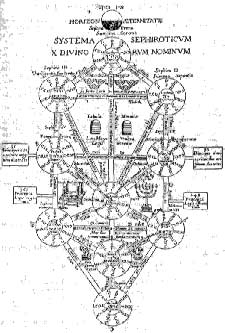
Living in the town of Tzefat in 16th-century northern Israel, Rabbi Isaac Luria dwelt among Spanish-Jewish exiles who traded heavily in the mystical concepts of kabbalah, ancient received wisdom. Rabbi Luria, sometimes referred to by his acronym, the AR”I (Elohi Rabbi Yitzhaq, the divine Rabbi Isaac), crafted a new approach to kabbalah which envisioned God’s tzimtzum (contraction) in creating the world. This tzimtzum caused the infinite light of God to be poured to overfilling into the vessels that had contained the ten sefirot (Divine emanations) of the Tree of Life, causing many of them to shatter. Some of these vessel fragments became bound up with sparks of the original light in impure qelipot (shells). Rabbi Luria saw one of our goals as Jews to be liberating those sparks from the qelipot, and thus repairing the world.


http://www.reversespins.com/sefirot.jpg

One ceremony which grew out of the Lurianic school of kabbalistic thought is the Tu Bishvat seder. Modeled on the Passover discussion and dinner that we all know, the mystical Tu Bishvat seder featured the consumption of shelled fruits and nuts as a physical manifestation of our task to repair the world through seeking and opening the metaphorical qelipot. Although Tu Bishvat is identified in rabbinic literature as the day on which all trees in the world turn one year older, the Lurianic kabbalists reframed it as an opportunity to celebrate not only the actual trees, but the Etz Hayyim, the sefirotic Tree of Life, and to return sparks to their primordial source.

We at Temple Israel will attempt to liberate a few sparks on the evening of January 30, as we gather for the N’ranena musical Kabbalat Shabbat service, followed by dinner and a mystical Tu Bishvat experience. Join us as we drink four cups of wine or grape juice, eat tree produce, chant a niggun or two, and connect with the Tree of Life. It will be a sacred moment for the entire family.


~
Rabbi Seth Adelson

Friday, January 9, 2015

Heritage Trumps Hatred

As we begin the book of Shemot / Exodus and recount once again our descent into Egypt as a family and our ascent from slavery as a people, I am reminded by current events of the enduring value of peoplehood, and how it is a source of comfort in dark times. Within the first few verses of this book, the Egyptian pharaoh describes us as "benei Yisrael," the people of Israel (Ex. 1:9), the definition serving to set us apart as the other, as distinct from the native Egyptian population.

With today's hostage-taking episode in a kosher grocery in Paris, resulting in at least four dead and five wounded, our "otherness" was once again served to us in a particularly cruel stew of terror and hatred. On the heels of the killings earlier in the week at the office of Charlie Hebdo, it is evident that bad actors in this world include both Jews and free speech in the same cross-hairs.

In moments like these, when our inclination might be to respond in anger, I look to our tradition for strength. We are not a vengeful people; we are not bloodthirsty. Rather, tragedies such as these should be met with the same response that Jews have always had to anti-Semitic acts: to rally around our heritage, our tradition; to return to our mitzvot, our Torah; to remain stubbornly proud of who we are and who our God is. Our pride is more powerful than their hatred.


We mourn for those fellow Jews who fell at the hands of terrorists; our hearts go out to their families, to those of the French Jewish community who are feeling ever more besieged, and to all lovers of peace and freedom throughout the world whose hearts ache over the events of the past week. And we reach once again for the story of our national foundation, invoking as we do every time we finish reading the Torah the words of Eikhah / Lamentations (5:22): Hashiveinu Adonai eilekha venashuva, hadesh yameinu keqedem. Return us to you, O God, and we shall return; renew our days as of old.

Let this be a Shabbat shalom, a Shabbat of peace, for benei Yisrael.


~
Rabbi Seth Adelson