Wednesday, October 8, 2014

Raising the Joy Quotient, or, The Jewish Thanksgiving! (Turkey optional.)

I remember the Sukkot celebrations of my youth with a great deal of fondness. We did not build a sukkah at our house, but where I grew up we actually used to go with volunteers from our synagogue, Congregation Knesset Israel in Pittsfield, Massachusetts, to a nearby evergreen forest where we had been permission to cut down branches to use for the sekhakh. Somebody had a pickup truck, and we loaded up the back. I remember stringing up fruits - gourds and apples and pears and so forth - that looked quite nice and festive a few days prior to the holiday, but by the time Yom Tov rolled around, they were already looking pretty sad and attracted a whole lot of yellowjackets. The bees were a nuisance during qiddush, of course, but I seem to recall that nobody was ever actually stung.

Sukkot is the happiest holiday of the year - zeman simhateinu, the season of our happiness, as we refer to it when we recite “Ya’aleh veYavo” during services this week. This is a festival of pure joy; in the Torah reading for Thursday morning, for Shemini Atzeret, we will read from Deuteronomy (16:15, p. 1084 in Etz Hayim) that in this season,
שִׁבְעַת יָמִים, תָּחֹג לַיהוָה אֱלֹהֶיךָ, בַּמָּקוֹם, אֲשֶׁר-יִבְחַר יְהוָה:  כִּי יְבָרֶכְךָ יְהוָה אֱלֹהֶיךָ, בְּכֹל תְּבוּאָתְךָ וּבְכֹל מַעֲשֵׂה יָדֶיךָ, וְהָיִיתָ אַךְ שָׂמֵחַ.
You shall hold a festival for the Lord your God seven days, in the place that the Lord will choose; for the Lord your God will bless all your crops and all your undertakings, and you shall have nothing but joy.
And as if that were not enough, there are not one, but two additional observances associated with this time that actually have the word “happiness” (Hebrew: simhah) in them: Simhat Torah, and we all know what that’s about, and Simhat Beit HaShoevah, which was an ancient celebration during Sukkot that the Mishnah (Sukkah 5:1) describes as being the most joyous party of the year. It was a ritual designed to muster the water up from the deep to meet the rains that would soon fall from above (Ta’anit 25b), and ceased to be observed after the Second Temple was destroyed by the Romans in 70 CE.

But let’s face it. When it comes to rituals, Sukkot is also the most curious holiday for a few reasons. Its symbols and ritual items are, frankly, strange. There is a strongly agricultural theme, and how do we relate to that, as contemporary suburbanites? And also, there is just a whiff of paganism - living in a temporary hut decorated with produce, waving various types of flora around in unusual clusters and beating them on the ground on Hoshanah Rabbah.

Furthermore, this supremely happy holiday is just four days after the most solemn day of the year. The juxtaposition is somewhat jarring. We go from fasting to feasting.

But it is this juxtaposition which tells us everything about what it means to be a modern Jew. The whole range of contemporary existence is dense and frenetic. Our lives have become concentrated, chock-full of one thing after another, enhanced by the Information Age and the intrusion of our workloads into our personal time and the overwhelming number of extra-curricular activities our children are expected to check off. We are becoming an episodic people, where the Jews pop in for one thing or another from time to time, sandwiched in-between all our other obligations. The modern family hardly has  enough time to process where it has been before heading off to the next item. Current events come and go quickly; last week’s Facebook sensation is old news.

In that climate, it almost makes sense to put Yom Kippur and Sukkot right next to each other. They are almost polar opposites. But it also reminds me that my task as a rabbi is to even out the distribution. Wouldn’t it be a wonderful thing if the joys of Jewish life were highlighted as much as the repentance-driven, awe and vulnerability themes of the High Holidays?

Wouldn’t it be wonderful if everybody who showed up for Yom Kippur also built a sukkah? Consider the following:

Yom Kippur is a journey of the mind. Sukkot is of the body.

Yom Kippur is about seeking forgiveness for what we did wrong; Sukkot is celebrating doing right.

They are the yin and yang of the Jewish calendar. They butt right up against each other, but they are opposing forces. Theologically speaking, Sukkot represents what I think we need more of in the Jewish world. Rosh Hashanah and Yom Kippur place God on the mountaintop or on a throne, and we are lowly, frail creatures who can be terminated by God in an instant. It speaks of fear and awe. Untaneh toqef qedushat hayom, ki hu nora ve-ayom. Let us speak of the power of the holiness of this day, for it is awesome and frightening. Who will live, and who will die, etc. We add an extra word to Qaddish on those days: Le’eyla le’eyla (instead of only one le’eyla) - God is twice as far away from us, twice as high up in the heavens during the Aseret Yemei Teshuvah / Ten Days of Repentance.

Yom Kippur is about the distance between us and God. But Sukkot is about narrowing that gap, getting closer to God by getting closer to nature. The definitive sukkah experience is actually seeing the heavens through the sekhakh, about getting closer to God.
Sukkot is a “let’s roll up our sleeves, get out there and do something” festival. It’s about our own power, our ability to effect change with our hands. God is the source of our strength, the force and inspiration that works through us and within us to make things happen. But we actually do the physical work.

Yom Kippur is about yir’at Adonai, fear of God. Sukkot is about El Hai VeQayyam. The living, ever-present God, who is there with us as we build and shake and celebrate.

Yom Kippur is about how our fate is in God’s hands. Sukkot is about how we have the ability to fashion our own lives.

Yom Kippur is a synagogue-centered holiday. We spend all day in synagogue, essentially (if not actually) filling the entire 25 hours with prayer. Sukkot is about getting outside, about feeling open to the elements, as a part of the greater whole of Creation. The Simhat Beit HaShoevah party took place on all the nights of Hol Hamoed, with instrumental music and dancing and food.

I could go on. But what do we learn from this?

First of all, that we need both. Fasting and partying are right next to each other; afflicting your souls is right up there with celebrating.

Second, that, as modern people, we have inherited a Jewish world that emphasizes the self-denial and soul-affliction far too much, at the expense of the joy. Back in my engineering days, I had a friend, a fellow chemical engineer who was not Jewish, and she married a Jewish man. They would go to his family’s home for the High Holidays, and she went a few times to synagogue with them. And the only word she could use to describe the experience to me was “dour.” Not exactly a hearty recommendation of the Jewish experience, right?

We need the Jewish world not to de-emphasize the gravity of the High Holidays, but rather to highlight the joy of Sukkot. I am not sure exactly how to do this; we have reached a point where many of us think that we have reached our quota for Jewish involvement if we show up for an hour-and-a-half on Yom Kippur. One of the upcoming goals of the Great Neck Shabbat Project (Oct. 23-25 - be there!) is to emphasize the value of powering down and tuning into our day of rest and enjoyment. We are hoping for a hefty turnout for all of the events. But that will be just one Shabbat out of the year.

I have another friend, a former congregant from my last cantorial position before I came to Great Neck. He asked me this year for my help in an as-yet-unnamed pilot program that will put actual sukkot in the hands of Jews who do not yet have them. His thinking is that Sukkot, as the festival that brings together joy and creativity, the physical and the spiritual, and unites families together for meals and celebration and extending hospitality to our ancestors (Ushpizin), has the potential to raise the bar for Jewish engagement in America. He donated three lovely, pre-fab sukkot for us to distribute here in Great Neck. We held a contest, and there are now a few more families on this peninsula engaged with the festival. His goal is to scale this up with the help of other donors; the idea is similar to that of PJ Library, which put free Jewish books in the hands of families with children under the age of eight.

Perhaps it’s merely a question of marketing: we have tried this year to make sure that we emphasize all of the Sukkot-related events here at TIGN with a handy-dandy reference guide (“Sukkot-at-a-Glance”). But maybe this festival needs a marketing campaign: something like, “Join us for the Jewish Thanksgiving! Turkey optional,” or “You don’t have to feel guilty to celebrate Sukkot!” Other suggestions? (Post below.)

Marketing or no, what we should be striving for is to emphasize the joyous aspects of our heritage, and not just the weighty, dour ones. The overarching message of Judaism is not, “Because that’s the way we’ve always done it.” Rather, it is, because this means something, and you need more joy in your life. Come and celebrate with us!

So please, let this year be a shanah tovah, a good year, and this festival a hag sameah, a joyous holiday.


~
Rabbi Seth Adelson
(Originally delivered at Temple Israel of Great Neck, Shabbat Hol Hamoed Sukkot, 10/11/2014.)

Wednesday, September 24, 2014

Lend Your Voice in Song - Rosh Hashanah 5775

Take a deep breath. In. Hold. Now let it go. Out. Release.

Let’s face it. 5774 was a rough year, particularly for the Jews.

This summer, as Rabbi Stecker was in Jerusalem and in and out of bomb shelters, the Israel Defense Forces entered Gaza with the stated objective of stopping the barrage of rockets by Hamas. While Israelis ran for cover, most of us here in America were struggling with the following question: How do we respond? How do we show our support? (Some things we did here at TIGN: We held a fundraiser for our sister congregation in Ashkelon; we sent them a video greeting; we held an info session for our college students, many of whom will confront anti-Israel activism on campus.)

Those of us who use Facebook (if we’re not friends on Facebook, we should be. Friend me!) were subjected to a barrage of articles, analysis, blog posts, status updates, body counts, anti-Israel and sometimes even anti-Semitic postings by people we thought were friends. Or even worse, people who really are friends but are unaware of how they are propagating canards, stereotypes, and sometimes outright lies.  Social media became a battleground that was not as physically bloody as Gaza but very nearly as emotionally taxing.

But I think the worst of it was the anti-Semitic mobs that surfaced all over the world to protest Israel’s incursion in Gaza. The hooligans in France who held a Parisian synagogue under siege. The protesters in Boston and LA who attacked supporters of Israel. The mob in Germany heard chanting, “Gas the Jews.”

A sign held by a protester at the rally
A sign displayed at an anti-Israel rally in Minneapolis in July.

As was mentioned in a very timely piece in the New York Times this week, just two weeks ago in Brussels, on the European Day of Jewish Culture, as Belgian Jews gathered to dedicate a Shoah memorial, youths threw stones and bottles at them; a few days later, a suspicious fire broke out at a synagogue in the same city. This follows the killing of four at the Jewish museum in Brussels earlier this summer, even before the Middle East erupted.

Take another deep breath.

I spoke this past summer about the current surge of anti-Semitism, and my message went something like this: It is shocking and disgusting and deeply troubling. But our obligation in the face of it is to look past the hatred, as our ancestors have always done, to hold onto our traditions and our heritage.
 
But that’s not so easy, right? Especially when that hatred is staring you in the face from your computer screen.

Some of you know that my wife, the daughter of two Hungarian Shoah survivors, still has relatives in Budapest, and that we have been to visit a few times. I was in Hungary last year, and at a Masorti (Conservative) minyan that meets in an apartment in Budapest, I met an attendee named Tamás whose parents had hidden from him that he was Jewish. Tamás grew up Christian, and it was not until he was in his 40s that he discovered he was Jewish, and committed himself to learning about Judaism and to living a Jewish life. He also told me that he is not alone; there are perhaps thousands like him. After World War II, many European Jews chose to hide their Jewish identity. That was an understandable response to the horror of the Shoah. For some, it guaranteed, if you will, the objective of, “Never again” - that is, it can’t happen to me and my family again if we just stop being Jewish.

A leading Hungarian politician from the Jobbik party, which is right-wing, nationalist, and openly anti-Semitic, Csanád Szegedi, discovered two years ago that he himself was a Jew. He has since sought out his Jewish heritage, and was even circumcised, just to prove that he is seriously repentant. This is a man who has done some serious teshuvah.

What led the parents of these Hungarians to conceal their Jewish roots was hatred and fear. But what has driven people like Tamás and Mr. Szegedi to learn about Judaism and commit themselves to a Jewish life? Is it the desire to stick together in the face of hatred? In Mr. Szegedi’s case, he did not have much of a choice - his political career was destroyed and none of his old nationalist buddies will speak to him any more.

But maybe these returnees to Judaism have a more positive motivation: an ancient yearning for the richness of Jewish life and tradition. A desire to be a part of their people, Am Yisrael. Perhaps their motivation is even more simple: curiosity about their heritage, leading to a desire to learn more. Like a paleontologist unearthing fossils, the more dust she removes, the more she reveals the form of the ancient creature. The more that is revealed, the more there is to learn.

In America, the Jews have lived for decades now in relative safety, largely removed from the anti-Jewish sentiments that permeate much of the world. The ADL, which keeps track of these things, has noted that while anti-Semitic activity in America has declined in recent years, it has been on the rise everywhere else. Our member Steve Markowitz, who is the Chairman of the Holocaust Memorial and Tolerance Center of Nassau County, recently described this country as a “Jewish Disneyland” in comparison to the rest of the world.

After all, we have made it. Jews are accepted throughout American life and society. About a year ago, the Pew Research Center released a study on American Jews that found 58% of self-identified Jews who got married in the last decade or so are married to non-Jews. (The figure is much lower for those identified with Orthodoxy and the Conservative movement.) A couple of generations ago, few gentiles would marry us. Now we are desirable life partners; the daughter of a president married a Jew. We have arrived. (Not that this is a measuring-stick of which we are proud, but it is an indicator of our acceptance. It is also a challenge to Conservative rabbis and communities, but that’s a discussion for another day.)

Some in this room might remember a time when anti-Semitism was much more visible in America. But while American Jews in the middle of the 20th century were more likely to be subtle about their Judaism, today I have no fear about walking down the street wearing a kippah. (Despite the recent incident in Manhattan where a visibly-Jewish couple was attacked by thugs displaying Palestinian flags.)

And yet, here is the irony: as Jews have come to be more accepted in wider American culture, as we have been welcomed into formerly exclusive clubs, and intermarried with non-Jewish Americans, our commitment to Judaism per se has waned. And all the polling data backs up that assessment. Free entry into the wider society has bred a lessening devotion to Jewish life.

Once again, another deep breath.

Rosh Hashanah is a time of transition. This is a liminal moment - that is, one that marks a separation. Like lighting the Shabbat candles on Friday night or the havdalah candle on Saturday night, separating the mundanity, the ordinariness of the week from the holiness of Shabbat, Rosh Hashanah is perched on a fault line between the year that was and the year that will be. On this day, we look back to 5774, and all the ways that we succeeded or failed to meet our goals, and we look forward to 5775, a blank slate on which we hope to write a better story.

But leaving our own deeds aside, whether we all treated each other well or did what God expects of us or otherwise met our own expectations for ourselves, this past year has left a foul taste in my mouth. Commercial airplanes shot down and disappeared. Russian rebels in Ukraine. A bloody civil war in Syria. Ebola in Africa. ISIS. The death of Joan Rivers and Robin Williams, who have left us a much-less-funny planet. And, of course, there is that troubling worldwide rise in anti-Semitism.

The good news: we have a new year in front of us, and we can hope that this year will be better. And that is exactly what Rosh Hashanah is all about.

And really, it’s not just about hope. It has long been observed that Judaism is not about belief; it is about action. What we do matters. We have the potential to change our lives and the lives of others. That is why we keep coming back here every year, to these Ten Days of Repentance, when we scour our souls to bring out the shine, and recommit ourselves to making this world a better place. I might even argue that this is the central message of Judaism; each of us has the ability to effect real change. Each of us is called to tiqqun olam, repairing this very broken world.

We will invoke this same principle when we sing, deeper into the Musaf service, the great Aleinu. Yes, it is the same Aleinu that we all know and love, the one that indicates that services are coming to an end and we can go eat, but this is its original location. It is somewhat more glorified on Rosh Hashanah and Yom Kippur, when the custom is to actually prostrate ourselves, signifying our bodily commitment to being God’s hands on Earth.

But the call to action is buried in the second paragraph, which is almost never sung out loud; rather, we usually mumble through it at breakneck speed. If you want to see it, open your mahzor to p. 156, top of the page. This is the beginning of the Malkhuyot section of verses about God’s kingship/sovereignty, one of the three themed sections of the RH Musaf service:
עַל כֵּן נְקַוֶּה לְּךָ ה' אֱלהֵינוּ לִרְאות מְהֵרָה בְּתִפְאֶרֶת עֻזֶּךָ. לְהַעֲבִיר גִּלּוּלִים מִן הָאָרֶץ. וְהָאֱלִילִים כָּרות יִכָּרֵתוּן. לְתַקֵּן עולָם בְּמַלְכוּת שַׁדַּי.
And so, Adonai our God, we await You, that soon we may behold Your strength revealed in full glory, sweeping away the abominations of the earth, obliterating idols, establishing in the world the sovereignty of the Almighty.
It is our duty, says the ancient composer of this prayer, to act in building a world in which our actions echo the holiness to which God calls us. In ancient language, that meant sweeping away idolatry, but to us today it means to work hard, to put actual elbow grease into making this world a better place, free of hatred, free of oppression, free of suffering and war and all types of destruction.

To that end, I would like to propose a call to action, a response to the anti-Semites of this world: We will not let you drive us further away from Judaism. Rather, we will embrace wholeheartedly our tradition, our community. We will maintain our pride in who we are, in our values, in our heritage of learning and practice.  

While the aftermath of the Holocaust may have driven the hatred of Jews underground for a time, it has emerged once again. This is an unfortunate reality that we will have to accept. But that does not mean that we should retreat, or be any less Jewish. Hiding will only embolden those who hate us.

Rather, now is the time to take pride in our culture, our history, and our heritage. Now is the time to renew our covenant with God, to refresh our communal ties, to strengthen our identity. Just as the best response to anti-Israel activists is to arm ourselves with knowledge about the complexity of Israel’s position, the best response to anti-Semitism is to be not merely comfortable, but downright exultant in knowing who we are and what we stand for.  The best response to anti-Semitism is to arm ourselves with knowledge: where we came from, what our sages have shared with us across the ages, how and why we maintain our traditions and pursue our spirituality, what we have given to the world.

You may ask, “How might I do that, Rabbi?” I’ll tell you:  

1. Learn something new about Judaism. Most of us have not considered terribly deeply all of the richness of Jewish tradition since our benei Mitzvah. It’s not just about matzah and apples and honey and potato latkes. Now might be the time to get back into the game: Read a book, take a class, come learn with me. I will offer to lead a discussion for you and any group of friends you can assemble. Just call my office (or email, or find me on Facebook or Twitter).

2. Re-connect to Jewish life. You have a great opportunity in the Great Neck Shabbat Project, Oct. 23-25:


But of course we are here with plenty of Jewish offerings every day of the year.

You can start small - merely by typing a few keywords into a search engine. Here is a list of reliable online resources:
For taking a break on the seventh day: sabbathmanifesto.org
For learning about all aspects of Judaism: myjewishlearning.com
For issues about Jewish parenting: kveller.com
For current events and analysis: forward.com and tabletmag.com
For figuring out what time services are at Temple Israel: tign.org
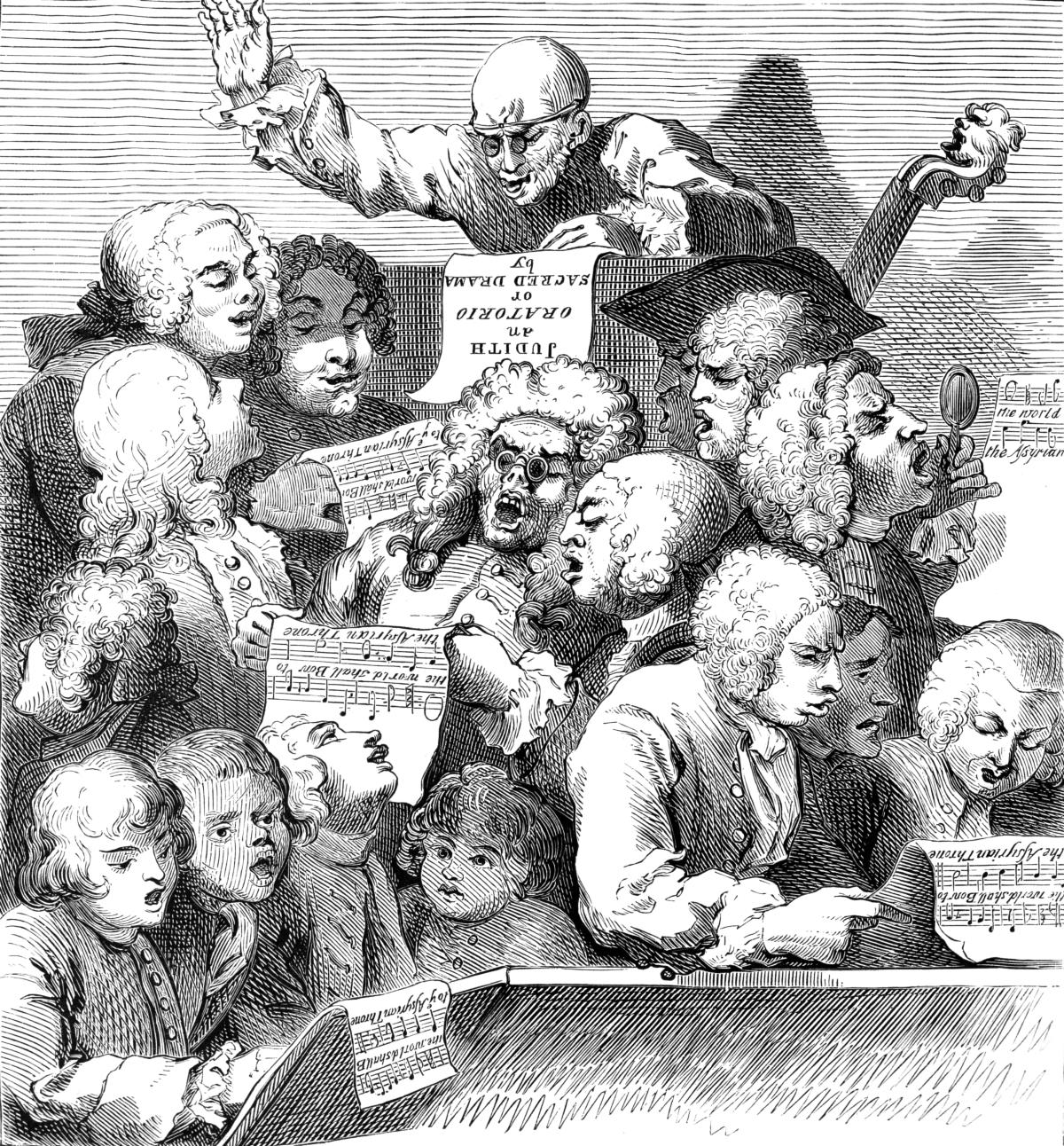
But the final suggestion is as follows: Lend your voice in song.

http://www.shakespeares-sonnets.com/Archive/Images/Chorus1.jpg

I recall one of my first Hebrew School teachers, maybe when I was in first or second grade, Mrs. Bashevkin, explaining to us that when in hot water, Jews stick together. OK, so I was like, 7 years old, and this was a very confusing image. I figured out a few years later what she meant: We stand together, we support each other, we think and act as a community.

As a teenager, my family attended Shabbat morning services every weekend. Occasionally, when my mind would wander in synagogue (nothing has changed!), I used to think about all the Jews that were in other synagogues at the same time, all up and down the Eastern time zone. Were they all on the same page in the siddur? Could it be possible that we are all singing “Aleinu” at exactly the same time?

The image is a powerful one. One of the ways that we stand together as a people is that we literally stand in prayer together, all around the world. And we sing together.

And we need your voice. The voice of every single person in this room. Not necessarily to be in synagogue every Shabbat, or to take upon yourself all 613 mitzvot at once, but to contribute to the great Jewish chorus any way you can.

My friend Michael Goldwasser, a music producer, R&B songwriter and performer, pointed out to me recently that he was invited to join an organization called Creative Community for Peace, which features members of the performing arts community who are supporters of Israel. Among the boldface-names who have signed on to their ads are Paul MacCartney, Madonna, Elton John, Lady Gaga, and Justin Bieber; there are many more. Many of the celebrities who have lent their names to the campaign are not Jewish. Most are probably not too familiar with all the political complexity surrounding Israel, Gaza, Hamas, the Palestinian Authority, and so forth, or for that matter the long and complicated history of anti-Semitism. But all are willing to figuratively lend their voices in support of Israel.

And you can too - not just in support of Israel, but in support of Jews, Judaism, Jewish life, and Jewish identity. Find a way to lend your voice - by learning (the highest mitzvah of all of the 613!), by showing up and committing time to your community, by seeking to understand Jewish values and implement them in your own life, by traveling to Israel (if not outright making aliyah), by representing your people well in the public sphere.

The true response to anti-Semitism is not to retreat. The true response is rally together as a community and lend your voice. Our ancestors survived two millennia of persecution, of oppression, of dispersion, of moving from one place to another as they were alternately welcomed and then kicked out of places all over the world. Did they give up on being Jewish? A few did, here and there. But the vast majority of us did not, and that there are so many of us gathered in synagogues on this day around the world is a testament to our historic victory over anti-Semitism.

The greatest threat to Judaism is not hatred. It’s not Hamas or ISIS or al-Qaeda. The greatest threat to Judaism is apathy.

So take another deep breath, and lend your voice, so that we may work together in repairing this world. Your people need you now.

Shanah tovah. A healthy, satisfying, and peaceful 5775.


~
Rabbi Seth Adelson
(Originally delivered at Temple Israel of Great Neck, Rosh Hashanah 5775, September 25, 2014.)